
Sustainability in Woodworking: Eco-Friendly Practices and Materials for the Modern Craftsman
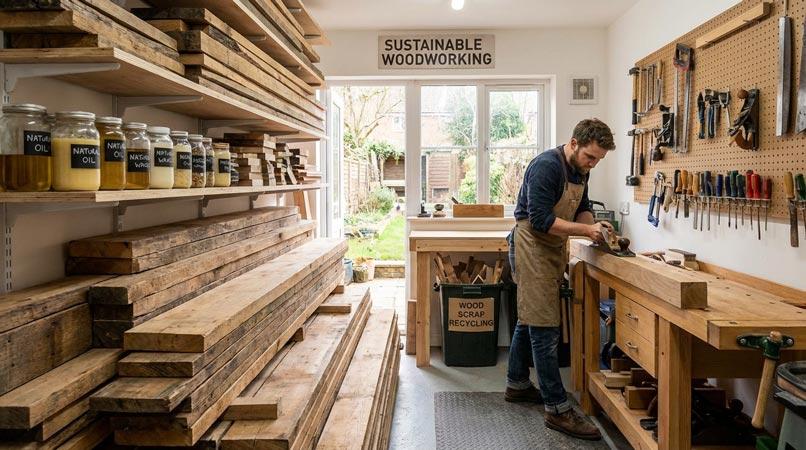
Sustainability in Woodworking: Eco-Friendly Practices and Materials for the Modern Craftsman - A step into the workshop.
Stop Wasting Wood
Generate clear cut diagrams instantly with our new Cutlist Optimizer. Plan your cuts to make your next build easier.
From the Grain Up: Building a Sustainable Woodworking Practice
Here in the Pacific Northwest, you're never far from the forest. Even in my Seattle workshop, surrounded by the hum of a CNC router and the gleam of precision hand tools, the damp, pine-scented air is a constant reminder of where our material comes from. It’s a reminder of our responsibility. For years, I’ve been blending technology with traditional craft, and I've come to believe that the most innovative thing we can do right now isn't about a new tool or a new technique—it's about building with conscience. This is about designing with intent, and for me, that intent is sustainability.
The conversation around eco-friendly practices is getting louder, and for good reason. Our clients are asking for it, and our planet demands it. A recent surge in interest shows that consumers are actively seeking products with a story that includes environmental responsibility. This isn't a fleeting trend; it's a fundamental shift in the market. It's a move away from the disposable and toward the durable, the thoughtfully sourced, and the non-toxic. For the modern craftsman, this shift represents a tremendous opportunity: a chance to lead, to innovate, and to create work that is not only beautiful but also beneficial.
The "Why": A Craftsman's Duty to the Forest
As woodworkers, we have a more intimate connection to the natural world than most. We understand the character of a specific species, the story told by its grain, and the potential held within a raw slab. That intimacy comes with a duty of stewardship. The health of our forests is directly linked to the health of our craft. When we choose our materials and methods, we are casting a vote for the kind of world we want to live in.
Sourcing wood irresponsibly contributes to deforestation, habitat loss, and a decline in biodiversity. Aggressive harvesting practices can decimate ecosystems that take centuries to recover. Furthermore, many conventional finishes release Volatile Organic Compounds (VOCs) into the atmosphere—and into our workshops and homes. These chemicals are linked to a host of health problems and contribute to air pollution. In a sealed workshop during a long, rainy Seattle winter, the quality of the air I breathe is something I take very seriously.
By embracing sustainable practices, we do more than just minimize our negative impact. We actively contribute to a healthier planet and a more resilient industry. We create a powerful narrative for our work, adding value that goes far beyond aesthetics. We align ourselves with a tradition of craftsmanship that has always valued resourcefulness and respect for the material.
The "How": A Blueprint for an Eco-Conscious Workshop
Transitioning to a more sustainable practice doesn't require a complete overhaul overnight. It's about a series of deliberate, incremental changes. Here’s how I’ve integrated these principles into my own hybrid workflow.
Sourcing with a Conscience: From Certified Timber to Local Windfall
The most significant choice we make is our wood. My first preference is always for reclaimed timber. Old-growth wood salvaged from demolition projects is often of a quality that is simply unavailable from new harvests. It's dimensionally stable, rich with character, and every board has a history. The beams from an old Seattle warehouse can become a stunning dining table that carries a century of stories within its grain.
When reclaimed wood isn't an option, I look for the stamp of the Forest Stewardship Council (FSC). This certification is a guarantee that the wood was harvested from a forest managed to the highest environmental and social standards. It ensures that biodiversity is maintained, local communities are respected, and the forest will remain healthy for generations to come. Reputable institutions in the craft, like the Chippendale School of Furniture, often emphasize the importance of understanding your timber's origin, a practice we should all adopt.
Finally, don't underestimate the power of sourcing locally. Reducing the distance your material has to travel significantly cuts down its carbon footprint. Building relationships with local arborists and sawyers can give you access to unique "urban lumber"—trees that had to be removed from city parks or backyards due to storm damage or disease. This not only provides you with incredible material but also supports your local economy.
The Precision Workflow: Minimizing Waste, Maximizing Material
Waste is the enemy of efficiency and sustainability. Every offcut represents wasted material, wasted energy, and wasted money. This is where a hybrid woodworking approach truly shines. Before I make a single cut, I model the entire project in software. This allows me to nest parts with incredible precision, optimizing my layout on a sheet of plywood or a set of rough-sawn boards to minimize scrap. My CNC router then executes these cuts with a level of accuracy that's impossible to achieve consistently by hand.
But you don't need a CNC to be smart about waste.
- Create a "Cut List": Plan all your parts in advance. Organize them from largest to smallest to ensure you're using your stock intelligently.
- Embrace the Offcut: That small piece of walnut isn't trash. It’s a future drawer pull, a set of inlay details, or a child's toy. I keep organized bins for valuable offcuts sorted by species. This "scrap" has become one of my most valuable resources for small projects and accent details.
- Design for the Material: Sometimes, the most sustainable choice is to let the dimensions of your available lumber inform the final design of the piece. This approach, long-practiced by frugal masters, forces creativity and results in less waste.
The Finishing Touch: Healthy for You, Healthy for the Planet
The final step, finishing, is where many workshops introduce the most harmful chemicals. For years, the industry standard has been solvent-based lacquers and polyurethanes, which are high in VOCs. Today, the market for high-quality, low-VOC and zero-VOC finishes is exploding, and their performance is outstanding.
I've moved almost exclusively to using hardwax oils in my shop. These finishes are made from natural plant-based oils and waxes. They are incredibly durable, easy to apply, and even easier to repair—a small scratch can be spot-repaired without having to refinish the entire piece. This not only eliminates harmful chemicals from my workspace but also extends the functional life of the furniture I build. As a great starting point for research, a number of woodworking blogs and suppliers like Halwoodworking offer guides on modern finishing options. Look for finishes based on linseed oil, tung oil, or beeswax.
Built to Last: The Ultimate Act of Sustainability
In our consumer culture, the most radical thing a woodworker can do is build something that is meant to last for generations. Durability is the cornerstone of sustainability. A well-built solid wood table that serves a family for a century prevents a dozen inferior, disposable tables from ending up in a landfill.
This means using strong, proven joinery. It means selecting the right material for the job. It means applying a finish that can be maintained and renewed over time. We are not just making furniture; we are creating heirlooms. This commitment to longevity is the ultimate rejection of throwaway culture and a core tenet of true craftsmanship. It's a principle you'll see taught in respected woodworking schools across the globe, from local community shops to renowned institutions. Mock Woodworking and similar educational resources often stress the importance of joinery and structure for this very reason.
Conclusion: The Future is in Our Hands
Building a sustainable woodworking practice isn't about sacrifice. It's about elevation. It’s about being more thoughtful in our sourcing, more intelligent in our methods, and more intentional in our design. It's about creating work that is not only aesthetically pleasing but also ethically sound. By embracing these principles, we enhance the value of our work, protect our health, and ensure that the craft we love will have a vibrant, healthy future.
In my workshop, the hum of the machines and the quiet slice of a hand plane are the sounds of this future being built—one where technology and tradition meet to create objects of lasting beauty and purpose.
Design with intent, build with precision.