
Figure-8s, Z-Clips, or Buttons: Fasteners That Let a Tabletop Move Without Cracking
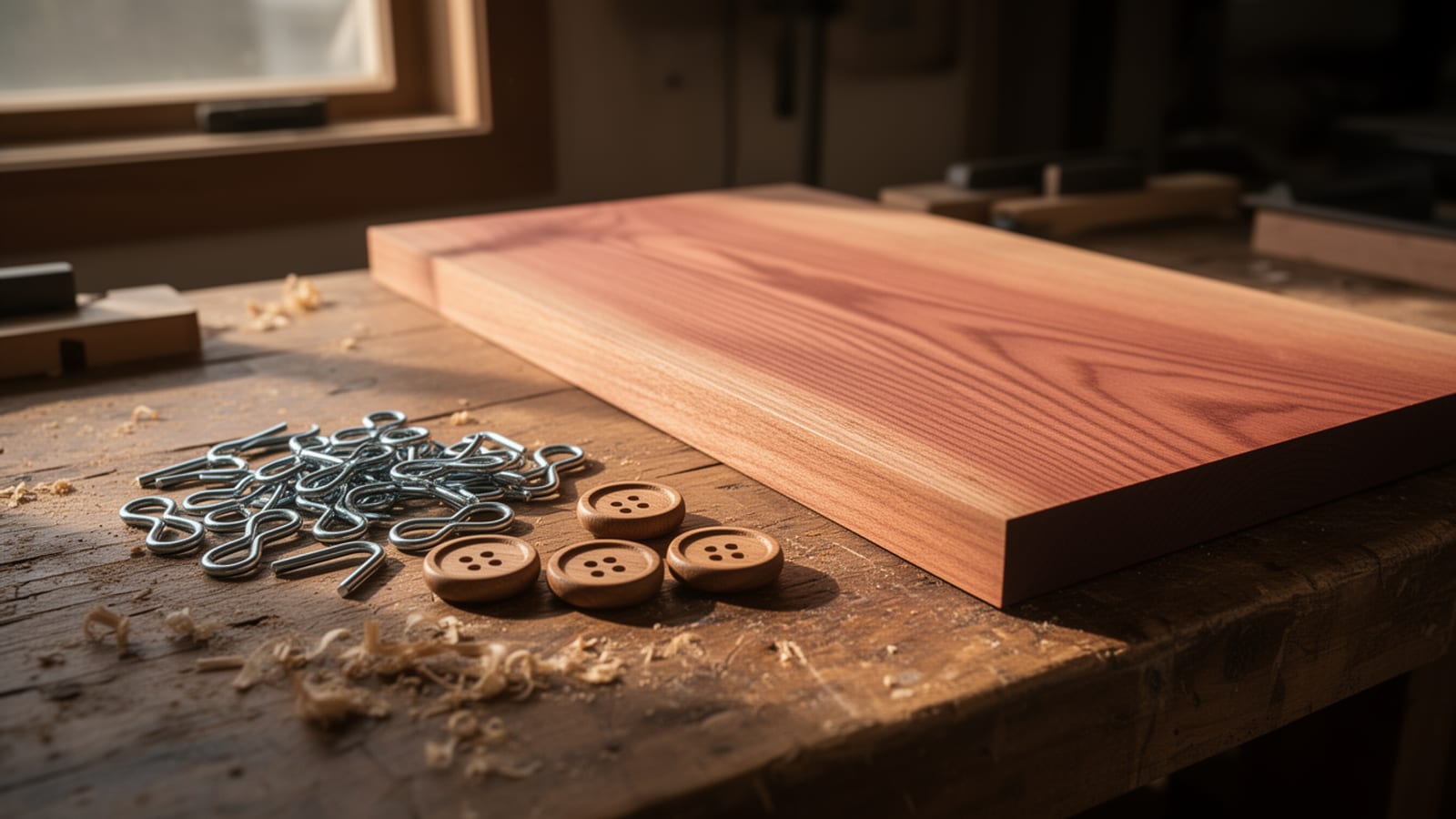
Figure-8s, Z-Clips, or Buttons: Fasteners That Let a Tabletop Move Without Cracking - A step into the workshop.
Stop Wasting Wood
Generate clear cut diagrams instantly with our new Cutlist Optimizer. Plan your cuts to make your next build easier.
The cold shop takes its time warming in March, and I take my time with it. There is a 24-inch-wide panel of flat-sawn red oak leaning against the bench as I write this — not mine to build, only to advise on — and the question underneath it is the same one that has quietly split more good tabletops than any chisel slip ever has: how do you hold a top down while letting it move?
Wood moves only across the grain. That sentence, from Woodcraft's Paul Anthony in his article on tabletop fasteners, is the whole physics of the problem, and the U.S. Forest Products Laboratory numbers behind WoodBin's shrinkage table tell you exactly how much. Northern red oak, green to oven-dry, shrinks 4.0 percent radially and 8.6 percent tangentially. Sugar maple, 4.8 and 9.9. American beech, 5.5 and 11.9 — among the worst flat-sawn movers in the table. The tangential figure is what a flat-sawn board obeys, and it is roughly double the radial figure of the same species. Quarter-sawn stock halves the travel any fastener must absorb. That single ratio, the T/R column in WoodBin's table, should be in your head before you choose hardware.
The Failure the Fasteners Exist to Prevent
Joe Hurst-Wajszczuk, writing for Woodcraft, puts the stakes plainly: over-secure a top and it is doomed to shrink and crack in the dry season, or expand and bow during humid months — and possibly damage the base. Glue it down or drive plain screws through it and one of those two outcomes is coming for you. There is no craftsmanship so careful that it suspends the shrinkage table.
The good news, and the reason this article exists, is that the hardware that solves the problem costs almost nothing. Two packs of figure-8 fasteners from Rockler run $13.98. A full set of Z-clips is $10 to $15. Shop-made buttons cost zero in hardware. The only expensive option in this whole comparison is the cheap one: the rigid screw.
The Figure-8: A Pivot, Not a Slide
The figure-8, or desktop, fastener is a small disc of heavy-gauge steel — Rockler's item 21650 is nearly 1/8 inch thick — screwed to both apron and top, pivoting in a mortise. WOOD Magazine quantifies that pivot: chisel the mortise edges so the connector can rotate about one-eighth of a turn. That is the entire travel allowance. Not a slide, a swing.
Both Woodcraft authors draw the same line. Paul Anthony says that due to their limited swing, he would not use them on tops wider than about 18 inches, and Woodcraft's second article repeats the guidance. Rockler, for its part, recommends 12-inch spacing and says that on larger tops the fasteners are best used in the end aprons only. Two publishers, slightly different prescriptions, one agreement: never put figure-8s on the long, cross-grain side aprons of a big top.
Where they earn their keep is a small top — a desk, a nightstand, anything under 18 inches wide, especially in a balanced species. Black walnut moves 5.5 percent radially against 7.8 percent tangentially, per WoodBin, the lowest T/R ratio among common hardwoods in the table — a narrower spread, less travel, a pivot that can cope.
The Z-Clip: Maximum Travel for Minimum Money
The Z-clip screws to the underside of the top; its free end rides in a saw kerf or groove in the apron. Woodcraft says plainly that Z-clips allow more movement than figure-8s, and the rise at the free end is usually about 3/8 inch, per WOOD Magazine — the number behind that claim. Compare that to the figure-8's one-eighth-turn swing and the arithmetic is not close.
Space them every 8 to 12 inches along each apron — a range WOOD Magazine gives and Obsessed Woodworking's Jodee echoes — and use a depth stop when you bore so you don't poke through the top. Woodcraft's HIGHPOINT 8-piece set, item 159301, lists at $5.49; Rockler's 8-pack of Z-clip-style fasteners is $4.99. Per clip, you're paying roughly $0.44 to $0.69 for the most travel of any commercial option here.
The trade-off: the free end is only captured by a kerf, which WOOD Magazine flags as a lighter-duty hold, and the metal shows on the underside. On a worktable nobody ever turns over, neither objection amounts to much.
The Button: Free, Strong, and Particular
A shop-made button is an elongated L whose tongue rides in a groove in the apron — WOOD Magazine calls it the all-wood version of the Z-clip, and Woodcraft calls buttons stronger and infinitely more attractive, millable from scrap. The specs are worth writing on the shop wall: rout 1/4-inch grooves, 1/4 inch deep, 3/8 inch down from the top inside face of the aprons; cut buttons from a 5/8-by-2-inch blank with 1/4-inch dadoes; fasten with #8 by 1-1/4-inch panhead screws and washers, spaced about 12 inches apart.
One rule above all the rest, from Popular Woodworking: the button's grain must run lengthwise, into the mortise. Get it wrong and the tongue breaks across short grain, and your free hardware becomes debris in a groove. The cost is milling time, not money.
Strategy matters as much as hardware here. Core77's "Designing for Wood Movement" series describes the classic arrangement: screw the top directly to the apron at only two fixed points, and let everything else — buttons, clips, slots — slide freely. The fixed points anchor the top; the fasteners govern everything outward from them.
Slotted Stretchers: The Complement, Not the Competition
WOOD Magazine adds a fourth method worth keeping in the pocket: a 3/4-inch stretcher with 1/2-inch-long expansion slots drilled on both sides of a centered pilot hole. A screw centered in the slot permits side-to-side movement while the stretcher itself resists top warping and apron bowing. It adds machining, so it is not the first thing I reach for, but on a base that needs the stiffening anyway, the slots are nearly free insurance.
What I'd Actually Do
On a 24-inch-wide flat-sawn red oak or beech top — T/R ratio 2.2 in both cases, per WoodBin — the figure-8 is out. Its swing absorbs a fraction of the travel such a top can demand, and two Woodcraft authors cap it at 18 inches for good reason. The choice is Z-clips or buttons. If the aprons are thick enough to rout a 1/4-inch groove and I have a quiet afternoon, buttons: strongest, more attractive, free. If I want it done before supper, a $5.49 pack of Z-clips every 8 to 12 inches does the job honestly. And if the top is walnut and narrower than 18 inches, a figure-8 pivot is a perfectly respectable answer.
The cheap fix fails not because the hardware is costly — none of it is — but because skipping the decision is the most expensive move on the bench. A top that splits across its width in August was fastened by someone who never looked up the tangential number. Look it up. Cut the groove. Let the wood breathe.